
Establishing Research
Introducing user research into a product organization for the first time
The Opportunity
I was brought in to establish user research across a portfolio of shopping apps in Europe.
The teams had knowledge of their products and individual markets, but had never incorporated direct conversations with users into product development. Hypotheses about user behaviour varied widely across teams. With ambitious growth targets, the risks of assumptions-based decisions was becoming expensive and time-consuming.
My objectives were to demonstrate the value of user insight, create a shared understanding of users across teams, and help research become part of everyday product decisions.
My Approach
I needed to build something teams could use long-term, beyond just one project. With no existing research channels or GDPR-approved tooling, I was starting from scratch.
Get GDPR compliance in place | Worked with the Legal team to set up compliance needs across tools, recruitment, data storage and usage. Created documentation to help teams become aware of, and abide by, GDPR needs.
Worked with Product, Design & Engineering to learn about their current process, and where the gaps were | An interesting point was that many were relying on app analytics to connect to their assumptions, I saw this as the connecting layer to help build in insights to triangulate.
Worked with Execs to understand what they want to see improve | They were aware that introducing research was a culture shift internally, that would naturally see some adopt faster than others. It was important to prove value through real projects, rather than simple education or a Lunch ’n’ Learn.
The First Project
I started with a simple get-to-know-your-users project. Mixed methods across the org’s three core markets in Europe.
User Survey
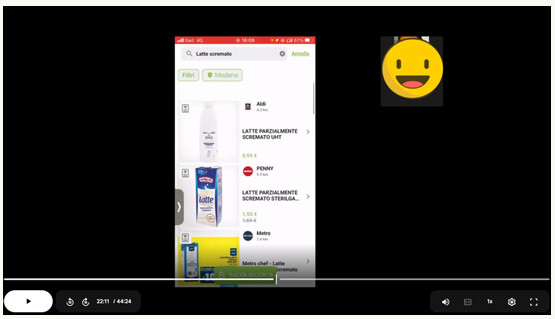
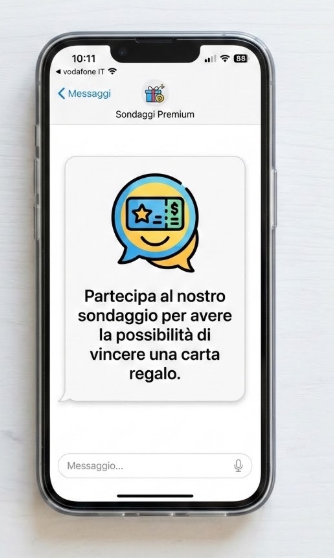
Established an in-app channel to survey users, implemented across 9 apps in 3 countries. This allowed us to survey across user types, rather than relying on an existing email subscriber list which would have skewed heavily towards power users.
Executed survey designed to understand user motivations and behaviour, in the context of the app experience and broader category.
Interviews
60 interviews were conducted, recruiting for a mix of engagement types.
To manage interviews across language barriers, I created the Discussion Guide and handled all analysis across translated transcripts, and engaged an agency to conduct the interviews.
What We Learned
Users behaved differently across markets, but the motivations behind those behaviours were remarkably consistent.
By focusing on motivations rather than demographics, I developed behavioural segments.
From there, I worked with Design and Product teams to develop design principles and a shared language for discussing user needs in the context of their product group and business.
Adapted for public presentation
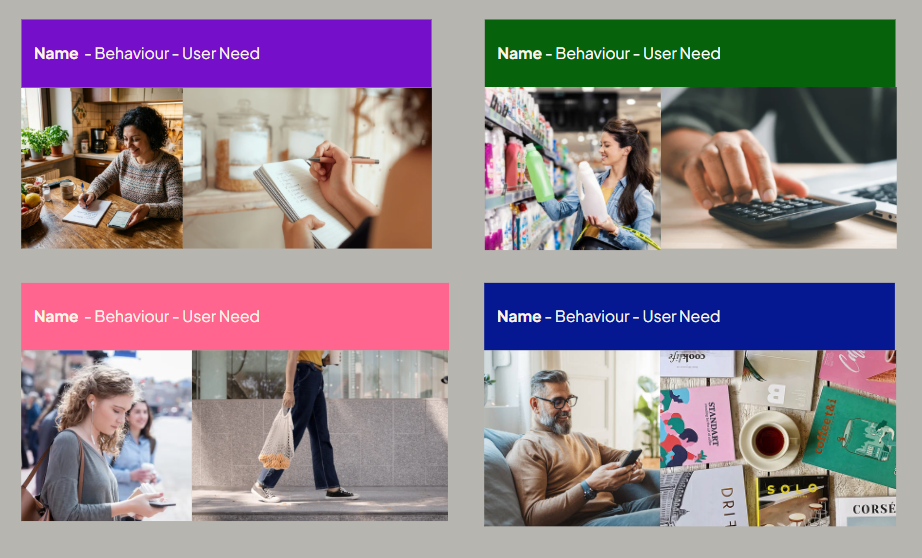
Segment overview cards designed for fast recall.
Succinct behavioural labels, related imagery, and consistent colour-coding created a shared shorthand teams could use immediately in discussions.
Making It Stick
Executing and delivering the research was the straightforward part. The bigger impact was to help teams extract value from the insights, and adapt their ways of working. In a fast-paced organization with no prior research culture and valued gut-decisions over data, I had to prove that this was worth people’s attention.
Phase 1 - Prove the value before asking for buy-in
Rather than launching org-wide with a presentation, I worked with Product leaders to embed the user types into a live feature redesign. Teams could see the insights working in a real product context before being asked to adopt them more broadly. The goal was evidence of usefulness: decisions were documented and team feedback was captured.
Phase 2 - Build familiarity, not just awareness
The org-wide introduction came second - a lunch-and-learn, followed by team-specific workshops focused on each team's own decision streams. This presentation and intro guide was later added to the company onboarding program, which meant every new employee encountered user insights before they'd been in a single product meeting.
Phase 3 - Integrating into workflows
The final phase was about embedding the user types into the systems teams already used: discovery briefs, PRDs, Analytics dashboards with behavioural proxies mapped to each type. Within two months, they were referenced in 100% of new briefs. Executives began referencing them in Town Halls. Roadmap planning sessions were grounded in “who is the customer?” The signal I was most pleased by wasn't the adoption metric - it was the shorthand names and Slack emojis teams had created for their day-to-day conversations. That's when I knew a shared language had landed.
Impact
Immediately: PMs and designers reported stronger confidence using user evidence in decisions and faster alignment with engineering — measured via pre/post surveys.
Within two months: User types referenced in 100% of new discovery briefs across the portfolio.
Long-term: Embedded into company onboarding, Analytics dashboards, and product planning cycles. New joiners encountered the user types before their first product meeting. Leadership built them into how they talked about the business. The research created a shared language that teams reached for on their own. That, more than any individual finding, is what made it worth doing.
This project reinforced that the methodology matters, but infrastructure, sequencing, and trust are what determine whether research changes anything.